
3 Tests Tell You How Long You Will Live

3 Tests Tell You How Long You Will Live

3 At Home Tests Tell You How Long You Will Live

Most people have a desire to live life to the fullest with a combination of quantity and quality.

This short article presents the findings of five researchers who identified three simple tests you can do at home to measure your possible lifespan.

The medical paper published in the British Medical Journal in 2014 revealed a 13 year study where they took 1,355 men and 1,411 women in 1999 when they were 53 years old and then checked to see who was alive and well 13 years later in 2012.

The following are the three tests that were evaluated:

  1. Standing on one leg with your eyes closed for 10 seconds or longer
  2. Having a strong grip
  3. Being able to stand up and sit back down in a chair many times in a minute.

According to the researchers of this paper, these tests clearly represented tell-tale signs of longevity.

Perform well in all three tests at age 53 or so and you should be healthy and vibrant 13 years later, when you are 66.

Less Stress = Longer Life

READ: Solve Stress Backwards

Researchers from University College London estimate that a 53 year old who can complete these tests successfully is up to 5 times more likely to be alive and well at 66 than someone who couldn’t complete the tests or who did them poorly.

There were far higher death rates among those who failed to complete the tasks.

Officially the tests are called:

The Chair Test (Standing up and sitting down in a chair 39 times in a minute for a man, and 36 times for a woman)

The balance test (standing on one leg for 10 seconds or longer with eyes closed)

The grip test (ability to apply a pressure of up to 54.5 kg or 120 pounds)


Reference:

Cooper R1, Strand BH, Hardy R, Patel KV, Kuh D.Physical capability in mid-life and survival over 13 years of follow-up: British birth cohort study. BMJ. 2014 Apr 29;348:g2219

Ronald Grisanti D.C., D.A.B.C.O., D.A.C.B.N., MS

Compliments from Functional Medicine University


Not happy with how well you did on the three tests?
Or, generally unhappy with the state of your health?
I can help you to find out IF and HOW you could change your future health condition. Just click a button below!
Trillion-Dollar Weight Loss

Trillion-Dollar Weight Loss

A recent article in The Economist is titled “The battle over the trillion-dollar weight-loss bonanza.”
What?
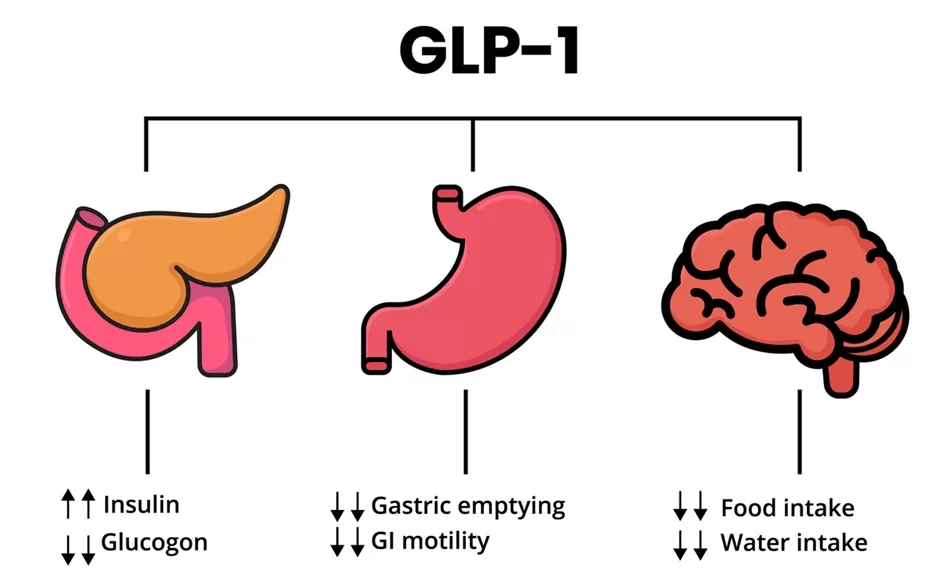
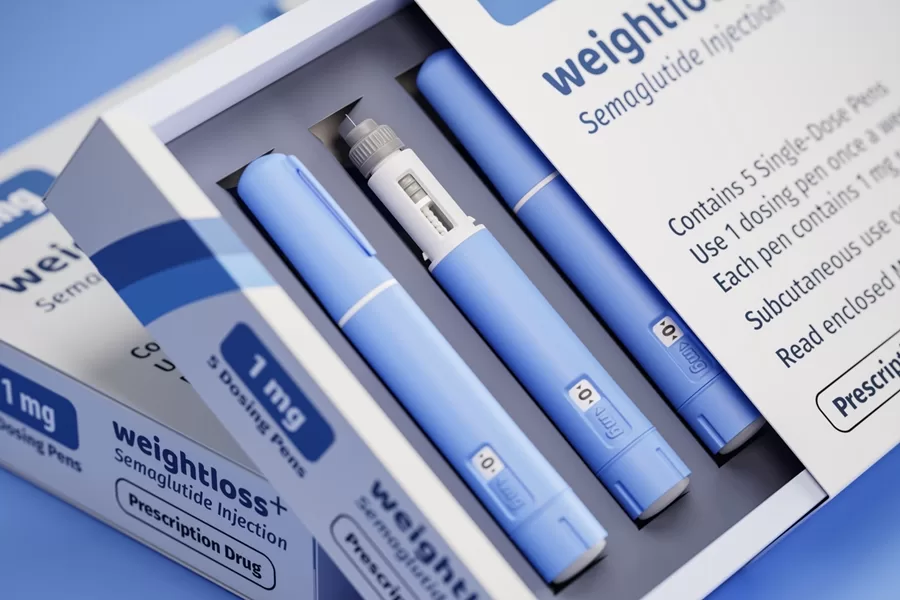
You’ve probably heard about the new weight-loss drugs such as Wegovy and Zepbound (called GLP-1 agonists), which can quickly reduce a person’s body weight by 15%. That’s 30 pounds lost if you weigh 200 pounds.
The Economist is predicting that annual sales of these drugs may reach $80 billion by 2030.
Close to half the world’s population is predicted to be obese or overweight by 2030 (World Obesity Federation). So, a trillion dollars in sales over a few years is not a stretch.
Execept…
In the history of pharmaceuticals, there has never been a product that was used by patients long-term that didn’t develop side effects. Generally, the more powerful the drug, the worse the side effects, as the chemical disrupts normal body functions.
These weight-loss drugs must be used for life and already have severe side effects (nausea, muscle loss, loss of enjoyment of foods). There is no predicting what happens after a person takes them for 10+ years.
Then, there’s human nature. As a species, we are not exceptionally good at doing things we don’t like unless there are consequences. Many overweight people live much healthier lifestyles to control their weight. Would they continue to eat well and exercise if they could take a drug and live any way they wanted?

Your Body is the Best Doctor for Your Body

Conventional medicine is very good at solving many health issues. Infections, trauma, and disease processes that the body can’t control are examples.
Medicine gets in trouble when it pushes the boundaries of its knowledge and proven techniques without sufficient due diligence. Developing chemicals that can alter the body in powerful ways without understanding how they work has been proven dangerous. Add a trillion-dollar incentive to this, and a disaster is very likely to occur.
There are effective ways of assisting your body in healing itself that don’t run these risks. This approach helps you to be healthier, more stable, and more able to live confidently in a toxic and stressful world.

Find out if you can get healthy naturally without dangerous drugs and surgery.

Do an online health survey and receive a free consultation call on the results.

Are Millennials the Canaries in the Coal Mine?

Are Millennials the Canaries in the Coal Mine?

I just saw some startling statistics from a recent Blue Cross Blue Shield (BCBS) report:

  • After age 27, Millennials chances of major health problems increase sharply
  • Millennials have higher rates of common health conditions than their Gen-X predecessors did at the same ages
  • As their health continues to decline, Millennials are going to be a huge financial burden on the already overwhelmed healthcare system.

Think about this: Before they reach their third decade of life, Millennials are at risk for chronic diseases that their grandparents may be facing.

Subscribe Now! Get More Health Info

Two Questions:

ONE: Why? What is destroying the health of young people who have grown up with the latest advancements of medicine, diet and a cleaner environment?

TWO: How can this trend be reversed, and how can we make sure that the next generation isn’t in even worse condition?

Children’s Health Has Been Sliding for Generations

You’ve almost certainly noticed that there has been a long-term health slide for our kids. I can recall that when I was in grade school, kids weren’t on drugs for ADHD. The school wasn’t a “peanut free zone” because of severe food allergies. There weren’t any diabetics in my class. There weren’t more than a couple of “fat kids” in my class, either.

The reason behind this deterioration of children’s health would likely be a major reason for the data in this Blue Cross Blue Shield study.

The Reason? Gut Microbes

In your body, there are about 10 times as many microbes as there are cells. That’s about 360 trillion microbes… mostly in your small intestine. They provide many services for your body including:

  • Digesting your food (which is your body’s replacement parts)
  • Producing 75% of your immune system.

Here’s an article from Scientific American on gut microbes

If you damage your supply of gut microbes, you become much more likely to develop many health conditions, especially those caused by a weakened immune system. This would include health conditions created by inflammation, auto-immune, allergies, etc.

Gut Microbes are damaged by:

  • Antibiotics (drugs you take, residual drugs in meat you eat, and environmental antibiotics in hand soap and many other products).
  • Food additives (preservatives, flavor enhancers, dyes, etc.)
  • Environmental chemicals you get exposed to all the time.
  • Eating too much sugar and refined carbohydrates (this causes fungus in your small intestine to overgrow and destroy the beneficial bacteria).

There are certainly many additional challenges that make it difficult to maintain good health in our society. However, most of these stresses piggyback on the gut microbe problem or are made much worse by it.

Then there’s the single largest and most vicious reason for declining health: The Big Lie.

The Big Lie

“Many health conditions are permanent; you can’t get ever get completely well and will need ongoing treatment for the rest of your life.”

This Lie applies to diagnosed diseases as well as non-diagnosed symptoms.

Here’s a partial list:

Diabetes, high blood pressure, IBS, GERD, asthma, allergies, high cholesterol, depression, heart disease, arthritis, chronic respiratory diseases, fatigue, sleep problems, digestive problems, anxiety, hair loss, weight gain, back/shoulder/neck/knee/hand pain, brain fog, memory problems, menstrual and menopause problems, infertility.

I call this the Big Lie because I watch bodies become healthy and heal themselves of every one of these conditions on a regular basis.

None of these problems can be successfully solved using drugs or surgery, and our current medical system uses ONLY drugs and surgeries. So, medically all these conditions are permanent.

Also, our medical system considers that it is all-knowing, and that nothing else other than drugs and surgeries has any validity. So, if you can’t get well medically then you better just learn to live with your problems.

What To Do?

If you think that your gut health may be affecting your health and quality of life:

Click the button below and make an appointment to find out exactly what is going on with your body and how you could resolve this without drugs or surgery.

The Hidden Life of a Holistic Doctor

The Hidden Life of a Holistic Doctor

Newsflash: Your Doctor Thinks You’re a Hopeless Case

Medical doctor friends always tell me that I have the best doctor job in the world. They say, “What you do is what I dreamed of doing when I first decided to be a doctor.” I’ll admit that my job as a holistic doctor is pretty cool, but I didn’t realize what I was (thank heavens) missing out on until recently when a patient who’s also a medical doctor told me a harrowing story of an experience she had in school.

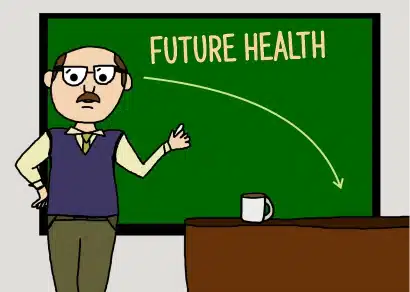
She said, “A professor explained that patients always get worse and worse until they die. He drew a big downward curve on the whiteboard and explained that our job (as doctors) is to make this process as comfortable as possible.”

She said she couldn’t believe that this was really the viewpoint of most doctors, but when she asked around, she found this attitude was almost universal. Sadly, she lost her ambition to treat patients as a result of this and went into another specialty.

Subscribe Now! Get More Health Info

Where did the idea of “help patients get well” go? In the areas of trauma and acute illness I think the “get well” idea is still very much alive. But doctors have no idea how to heal or cure chronic conditions (hormone imbalances, digestive problems, pain, fatigue, depression, weight, diabetes, blood pressure, etc.), and so are reduced to managing the symptoms with lifelong drug therapy. I can almost see how the professor came to his conclusions.

A different way to think: Holistic Doctor

My job as a holistic doctor is to help patients with chronic problems recover their health to where they have a good quality of life and maintain their health by themselves. I’ve been doing this for over 25 years with tremendous success. It’s really fun. My clinic is full every day with patients who had almost given up ever getting their health and lives back… and now they’re getting better and learning how to stay that way. It’s a happy and exciting place to come to work.

I can have a job like this because I’m a holistic doctor, but I’m very aware of the confusion sometimes caused by the word “holistic.”

Holistic? What the heck IS that, anyway?

Holistic: characterized by the treatment of the whole person, considering mental and social factors rather than just the symptoms of a disease.

Most people will certainly misunderstand this definition. Would this mean that a holistic doctor does counseling to help with their patients’ “mental and social factors?” Then there’s this “treatment of a whole person?”… well, would this mean a body, mind, spirit kind of thing? Is a holistic doctor a woo-woo, “think yourself well” approach, or is it real science?

My patients are looking for a serious solution that will work for a chronic health problem that is often destroying their lives. And let’s be real here: a consistent, predictable, effective solution to a severe chronic health condition isn’t going to be a woo-woo approach.

I consider myself a holistic doctor because I work with the physical body and the intelligence that operates it. Your body has an “on-board” intelligence that runs it for you, or else you’d be so busy running your body (digesting your food, controlling your blood pressure, running your immune system) that you couldn’t do anything else! Since it’s this intelligence that knows how to heal the body and what problems are stopping that healing, logically, the body should be the doctor on the case.

The only way to achieve the results I get with my patients is to realize that ONLY the body can heal chronic health conditions. And, since the body is designed to heal itself, the only reason that a person has a health condition would be that their body has run up against some problem that has stopped the healing process from continuing.

My job is to:

  1. Find out where the body’s healing process has gotten stuck or hung up, exactly why this is, and what the body needs in order to overcome the problem and continue healing.
  2. Give the body the help and assistance it needs based on the testing done in #1, using some really interesting and innovative methods.

Holistic, then, means that I am testing the intelligence that runs the body to find out what to do rather than go by “the standard treatment protocol” (doctors use a decision tree set of instructions to determine the treatment steps for most diagnoses, called a protocol or guideline). Only the body knows exactly what is wrong and how it can be healed. The body is the real doctor; I’m just the assistant.

This is a new idea for lots of people

I must educate all my patients about what I do and how it works. This is necessary because, since they are the ones living in the body we’re trying to heal, they have to do most of the work. So, I’m very aware of how little is understood of holistic doctors.

But it’s cool, isn’t it?

If you are on drugs for high blood pressure, there’s a chance you could improve, and your doctor would take you off of them.

If you are diagnosed as a diabetic, there’s a chance you could not be one anymore.

If you have done “everything” to get pregnant and the doctors have told you, “There’s no physical reason you can’t get pregnant, but we are out of options,” you might be able to be a mom.

If your life is a hormonal nightmare of discomfort, mood swings, and pain, that could come to an end.

It’s true that there is no such thing as a free lunch: you will have to work hard and long to accomplish any of these things. But if you are willing to do this, your problem might be solved.

I wish you the best of luck and offer you any help or advice I can.

High Cholesterol or Statin Drugs: Which is Worse?

High Cholesterol or Statin Drugs: Which is Worse?

This article explains how the villain of “bad” cholesterol (called “LDL”) is really NOT the villain at all.

Instead, it’s a combination of cholesterol AND another health condition (“insulin resistance”) that causes the danger of heart disease.

THE PROBLEM: The most commonly prescribed treatment for high cholesterol MAY CAUSE insulin resistance.

Go Figure.

The term “high cholesterol” has become synonymous with “danger of heart disease or heart attack.” Thirty-five million Americans take statin drugs to control their cholesterol despite the side effects of muscle pain (very common), liver damage and… insulin resistance. Keep that last side effect in your mind: insulin resistance.

This article explains how the villain of LDL (“bad” cholesterol) is an essential part of your immune system, controlling inflammation and infection. LDL is also a building block for cells and is what testosterone and estrogen are made from.

So why the bad rap?

New research shows that LDL cholesterol becomes sticky and blocks arteries ONLY if the person also has insulin resistance (which causes high blood sugar).

So, the statin drug you take to prevent your arteries from clogging could be causing the very condition that causes your arteries to become clogged.

To understand more about the causes and solutions of insulin resistance (this is the REAL villain) read Insulin Resistance—More Dangerous Than High Cholesterol.

Dr. Melodie Billiot

Dr. Billiot

Dr. Melodie Billiot

More on Insulin Resistance

Read: Insulin Resistance– More Dangerous Than High Cholesterol


Subscribe Now! Get More Health Info

Atherosclerosis– Is Your LDL Sticky?

Ronald Grisanti D.C., D.A.B.C.O., DACBN, MS, CFMP

Atherosclerosis is the thickening or hardening of the arteries caused by a buildup of plaque in the inner lining of an artery.

For as long as I remember, most people, including myself, have been told that LDL cholesterol is the bad villain of plaque build-up and HDL cholesterol is the good guy.

Of course, with this hypothesis, it would make perfect sense that the higher your LDL cholesterol, the greater the chance of getting atherosclerosis.

However, there is much more to the story and my hope today is to share a different angle that will shed some light on the real issues with LDL cholesterol and its nemesis called atherosclerosis.

The Significant Role of LDL in Our Bodies

Cholesterol isn’t inherently bad. In fact, it’s the building block for creating healthy cells. It also helps your body make testosterone and estrogen. Without LDL, these and many other steroid hormones wouldn’t be made effectively

Contrary to what we have been told, LDL cholesterol also has another good side: its ability to fight infections.

LDL plays a valuable and important role in the body’s response to an assault by infectious invaders. When bacteria invade our body, they release a cell wall component known as endotoxin. What is critically important and something we will dig in deeper in this article is that endotoxins are super inflammatory and can strongly trigger the immune system.

But research has shown that your friend LDL cholesterol is around to bind up this toxin preventing things from getting out of hand.

In a study using mice it was discovered that increased levels of LDL cholesterol were eight times more resistant to endotoxins. This showed a significant decrease in overall mortality when injected with gram-negative bacteria. On the other hand, rats with the lowest LDL cholesterol had an increased rate of mortality and levels of inflammation when injected with endotoxin.

Now, if you are like me, I would be asking, what about humans?

Is there evidence that higher levels of LDL cholesterol are protective against infections in humans? In fact, many studies are proving that higher levels of LDL cholesterol are protective as we age. This is more likely due to the positive impact on the immune system.

The answer is that LDL itself is not harmful, but in certain situations, it can be involved in responding to injury and inflammation. This, of course, makes LDL look like more of a firefighter than simply a criminal causing atherosclerosis.

So the question that we must ask ourselves is: Is there something more sinister behind the scenes that are actually driving heart disease (atherosclerosis)?

As I have discussed in a prior article, the real issue is insulin sensitivity and the stickiness factor.

In people who are insulin sensitive, rising LDL levels do not correlate with increased rates of heart disease. On the other hand, the higher the LDL, the greater opportunity for plaque formation in those who are insulin resistant. Remember it is not all about elevated levels of LDL but the more important villain of insulin resistance.

What will make our head spin is the fact that higher levels of LDL in the blood do not consistently correlate with the progression of atherosclerosis in the absence of insulin resistance.

LDL Stickiness is the Real Issue

Here is the important takeaway from this important article. LDL under certain circumstances (which I will mention in a minute) can get stuck within the arterial wall. So it is not the size or amount of LDL particles moving into the arteries that is important but rather if it sticks to the wall of the artery that determines whether or not it contributes to atherosclerosis.

Here is a good analogy:

If you were to throw a tennis ball at a wall unless the tennis ball and the wall were coated in velcro, the tennis ball would not stick. So to bring it back to reality, unless the LDL particle and arterial wall (the intimal space) were sticky, it does not matter how many LDL particles we have floating around in our arteries. The LDL “balls” only get stuck to the arterial wall when they are coated in what we will call “molecular velcro.” LDL is simply not enough of a problem alone to initiate plaque build-up. The takeaway is: it has to get stuck in the arterial wall to initiate the process of atherosclerosis.

Blocked Blood Vessels

Now the magic question

What in the world determines how sticky the LDL particle and the intimal space are?

There is now growing evidence during states of insulin resistance and inflammation that both the LDL particle and the arterial wall get coated in “molecular velcro” making everything more sticky, increasing atherosclerosis progression.

You may now be asking: really, how common is insulin resistance?

Would you believe that a massive 88 percent of the American population has some degree of metabolic syndrome (insulin resistance)?

So to conclude: 

In the absence of insulin resistance and inflammation, higher levels of LDL cholesterol are probably protective because of their roles in the immune response.

Refer Your Friend!

To whom would you like to forward this referral card?
Your Name(Required)

Download Your Free Guide

ANXIETY, WORRY & DEPRESSION

Learn about the causes of anxiety and depression, what you can do to reduce your suffering RIGHT NOW and how you can eliminate these problems from your life.

TO CLOSE, TAP OR CLICK ANYWHERE OUTSIDE THIS BOX

Download Your Free Guide

ANXIETY, WORRY & DEPRESSION

Learn about the causes of anxiety and depression, what you can do to reduce your suffering RIGHT NOW and how you can eliminate these problems from your life.

TO CLOSE, TAP OR CLICK ANYWHERE OUTSIDE THIS BOX

Download Your Free Guide

ANXIETY, WORRY & DEPRESSION

Learn about the causes of anxiety and depression, what you can do to reduce your suffering RIGHT NOW and how you can eliminate these problems from your life.

TO CLOSE, TAP OR CLICK ANYWHERE OUTSIDE THIS BOX